 info@theclinivex.com
  +1 (877)-861-1996



Filtered Pipette Tips vs. General Pipette Tips: Which Is Better for Your Usage
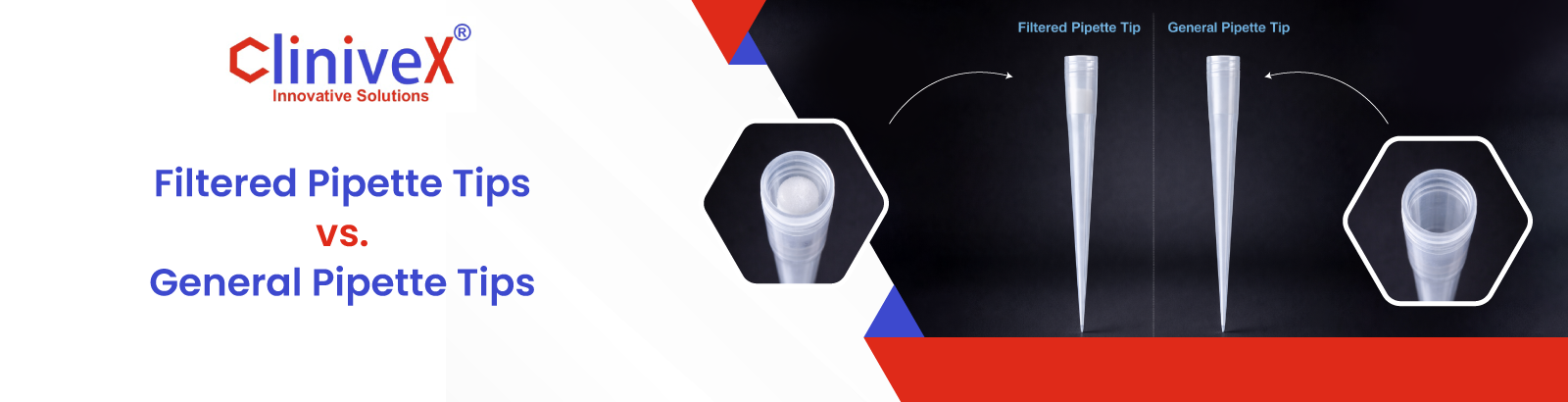
In any laboratory setting, accurate liquid handling is vital for reliable, effective experimental results. One of the most essential yet often overlooked consumables in the lab is the pipette tip. Pipettes are commonly used to measure small volumes of liquid in laboratories.
However, with so many pipette tip options available in the market, including filtered and general tips, choosing the right one can be challenging. But when it comes to ensuring the specific volume of liquid is dispensed and aspirated without contamination, using the right tip is important, as it significantly impacts contamination control, accuracy, and reproducibility.
Therefore, before choosing any of the tips from a pipette tips supplier, you should understand the difference between the two. In this blog, we will present the differences between filtered pipette tips and general pipette tips to help you understand which is better for your use.
Features and Benefits
Filtered Pipette Tips
Filtered or barrier tips can be used for pipetting volatile, corrosive, or viscous chemicals, or anything that could contaminate your samples or pipette. These tips have a filter inside. The filter helps protect against volatile solutions, aspirate viscous samples, and prevent aerosol formation in the container, which can contaminate and damage the pipette itself.
These tips are typically pre-sterilized, non-pyrogenic, and DNase/RNase-free. They are best used for sensitive applications such as qPCR. The filter stops sample carryover from the pipette, preventing contamination of the PCR.
Additionally, filter tips are perfect for new users. Pipette contamination is very common, especially when a new lab member mistakenly aspirates liquid into the pipette. Repairing the pipette's piston can be far more expensive than discarding the tip.
They are made from clear polypropylene (PP). The PP filters safeguard samples and pipettes from impurities. Filtered tips are widely used in clinical diagnostics and forensic analysis.
General Pipette Tips
General or non-barrier tips are made for regular use in the labs, especially when working with chemicals that will not contaminate your pipette. Non-barrier, non-filtered, general or standard tips are used for many non-sensitive applications. They are commonly used when sterility is not critical, such as for loading agarose gels and isolating plasmid DNA.
Some of the most significant advantages of these tips are that they are more universal and standardized, and are most commonly used in a lab, especially for non-sensitive chemicals. These tips are also less expensive.
Conclusion
Selecting the right pipette tip for your test or experiment in the lab can be overwhelming, as there are so many types to choose from. Regardless of the tip type you choose, it is important to ensure you buy from a trusted supplier like Clinivex to get high-quality, extensive ranges of geometrically optimized pipette tips.