 info@theclinivex.com
  +1 (877)-861-1996



Glass Graduated Cylinders vs Plastic Graduated Cylinders: How to Decide
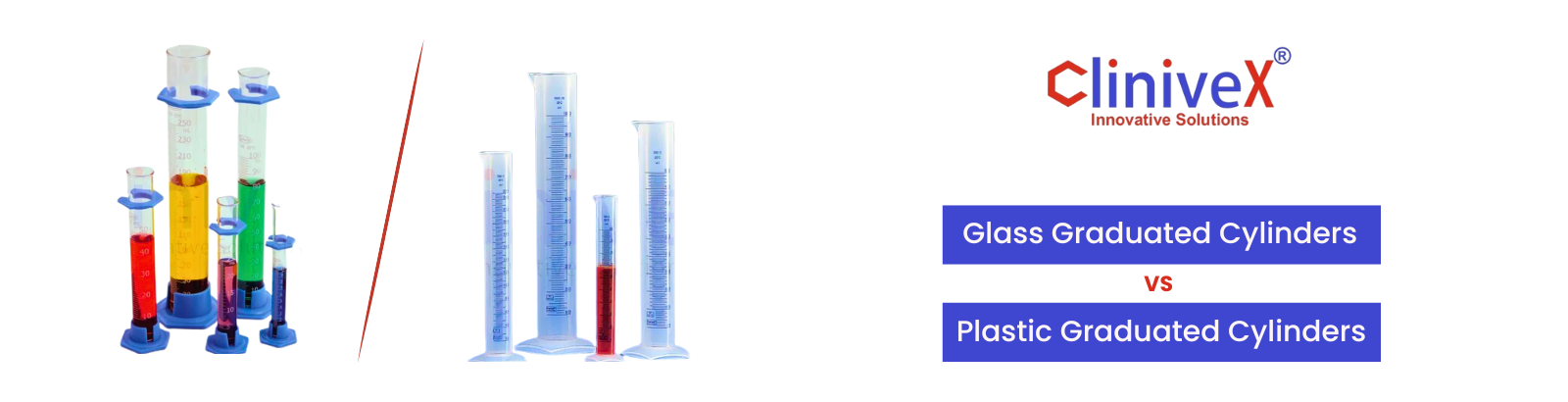
Selecting the right graduated cylinder is crucial when buying equipment for your laboratory. A wrong or poorly made cylinder can hinder the final results of an analysis or experiment.
Graduated cylinders are classified into two classes: class A and class B. The cylinders are also available in two materials, glass and plastic. Thus, when deciding on a cylinder, it is necessary to consider these factors.
In this blog, we will explain all those factors. Before contacting a laboratory glassware or laboratory plasticware supplier, consider reading this blog.
Difference Between Class A and Class B Graduated Cylinders
These classes represent the level of accuracy in a graduated cylinder. Class A graduated cylinders offer higher accuracy and lower tolerance than class B graduated cylinders. Class A graduated cylinders are used explicitly for applications that require more precise readings, like volumetric analysis. Hence, they are generally used in pharmaceutical and analytical laboratories. Meanwhile, class B graduated cylinders are commonly used in teaching and industrial laboratories where a high level of precision is not necessary.
Glass Graduated Cylinders
Glass graduated cylinders offer outstanding clarity and corrosion resistance against chemicals. They can withstand various chemicals and can also provide accurate measurements even after prolonged use. These cylinders are usually made from borosilicate material. They are more suited for applications that require precise readings all the time.
Plastic Graduated Cylinders
Plastic graduated cylinders are lightweight compared to glass graduated cylinders. They are more suitable for applications that use non-corrosive and non-reactive chemicals. These cylinders are usually made from polypropylene or polymethylpentene, which makes them less prone to breakage.
How to Decide Which One to Use?
In school laboratories, plastic graduated cylinders are more suitable because glass can easily break if not appropriately handled by children and can also severely harm them. Also, teaching settings do not require a high level of precision for experiments; hence, plastic graduated cylinders are perfect.
In industrial settings where the applications use non-corrosive substances, plastic graduated cylinders might be preferred. They are also more beneficial when conducting experiments or analysis outdoors due to the reduced risk of their breakage.
For pharmaceutical, chemical, and research laboratories, glass graduated cylinders are preferred due to their high accuracy and ability to withstand various chemicals.
Conclusion
As you can see, whether a graduated cylinder is made of plastic or glass, they are both equally helpful in their own regard. You must buy graduated cylinders from a trusted laboratory plasticware or laboratory glassware supplier because a poorly made cylinder can be hazardous for experiments.