 info@theclinivex.com
  +1 (877)-861-1996



Why Choosing High-Quality Needles Is Crucial for Reliable Blood Tests
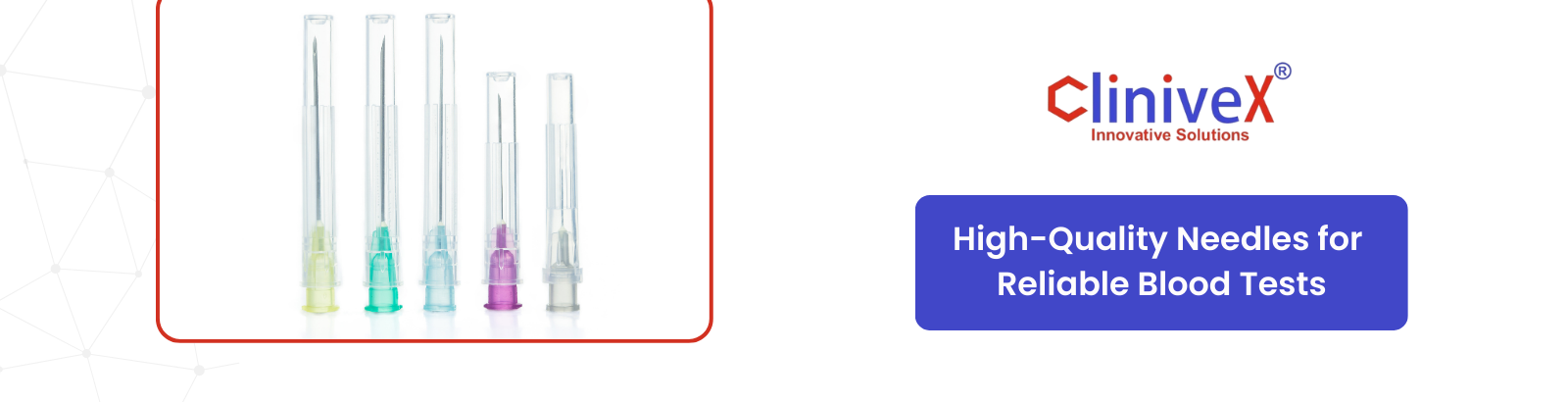
When it comes to sample collection, it’s easy to overlook the tools that are being used, especially something as small and common as a needle. However, the quality of the needle can make all the difference between accurate, reliable results and compromised data.
In both research and clinical environments, using a high-quality blood collection needle is not just a technical detail; it’s a crucial factor that safeguards the integrity of the sample.
In this blog, we will dive straight into how needle quality influences sample collection and why choosing the right needle can be a game-changer for precision and trustworthiness in your work.
Why Needle Quality Matters
When it comes to collecting blood samples, the quality of the needle used can significantly impact the integrity of the sample. If the needle is of low quality, it can introduce contaminants or impurities into the sample, leading to skewed or inaccurate results. Moreover, a dull or damaged needle can cause trauma to the tissue or cells being sampled, affecting the viability and reliability of the sample.
On the other side, using a high-quality needle from a blood collection tube supplier ensures that the sample collected is not compromised, lowering the risk of contamination and preserving the integrity of the sample. This is especially important in research and clinical settings where precise results are essential for making informed decisions and diagnoses.
Things to Consider While Selecting a Needle for Blood Collection
Material
Material is the first thing to consider while choosing a needle. Most manufacturers use stainless steel to make needles because of their durability and resistance to corrosion. Then, some needles are coated with materials like silicone or PTFE to reduce friction and improve sample flow.
Size
After material, the size of the needle is another factor to consider. The gauge refers to its diameter, with smaller gauge needles being thicker and larger gauge needles being thinner. The needle size chosen depends on the type of sample being collected and how the sample will be used.
Sharpness
Last but not least is the sharpness of the needle. This is an essential factor as it ensures a clean and accurate sample collection. For instance, a dull or blunt needle can cause unnecessary trauma to the tissue or cells, leading to cell damage or contamination.
And that’s why it is essential to regularly check the sharpness of needles and replace them as needed to maintain sample integrity.
Conclusion
In the end, needle quality plays a pivotal role in ensuring the integrity of samples collected for research and clinical purposes.