 info@theclinivex.com
  +1 (877)-861-1996



Why Tape Stripping Matters in Modern Dermatology Studies
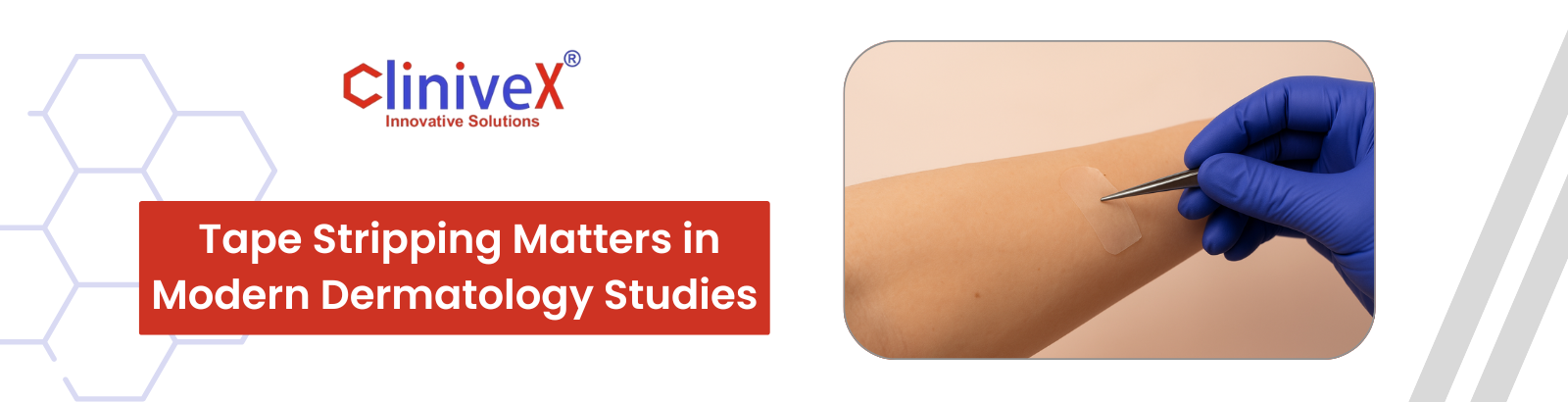
In today’s era of precision skincare and evidence-driven dermatology, researchers are constantly seeking methods that deliver accurate insights without causing patient discomfort.
Tape stripping, most commonly employed with D-Squame tape (a reliable industry standard), is a relatively straightforward technique that has proven to be a game changer. Tape stripping can be helpful when scientists want to remove the top layers of skin and evaluate biomarker expression, barrier function, or treatment response, such as skin irritation.
As dermatology moves toward more patient-centric and minimally invasive solutions, tape stripping has become an essential part of modern clinical studies. It is changing how researchers and clinicians assess skin health.
In-Depth Analysis of the Tape Stripping Procedure
RNA Analysis
The tape stripping method for RNA analysis involves repeatedly applying adhesive tape to the skin to collect superficial cells from the stratum corneum. This method is minimally invasive and can be used to study gene expression in conditions such as psoriasis or to aid in diagnosing skin lesions. However, it has technical challenges, including variability in RNA yield and quality. Once the tape is collected, the RNA is extracted for subsequent analysis, often through RNA sequencing or quantitative PCR.
Protein Analysis
Next on the list is protein analysis, where the D-Squame tape strips involve applying adhesive tape to the skin to collect layers of the outer epidermal cells, called the stratum corneum.
These samples are then processed to extract and quantify proteins, enabling researchers to study their content, distribution, and changes associated with skin conditions or treatments.
Lipid Analysis
Tape stripping for lipid analysis is a minimally invasive technique that uses adhesive tape to remove successive layers of the skin’s outer layer, the stratum corneum (SC).
After extraction, lipids stuck to the tape can then be extracted with organic solvents and analyzed by mass spectrometry to assess profile and concentration. While the overall method is relatively simple, there is a learning curve to achieving consistent, accurate results and to determining whether contamination is from the tape itself.
Advantages of Tape Stripping
- Non-Invasive and Safe
- Cost-Effective
- Easy to Perform
Tape stripping is a non-invasive method, meaning it doesn’t require any surgical procedures or significant patient discomfort. This makes it an attractive option for both clinical and research settings.
Compared with other methods, tape stripping is relatively affordable. The only cost involved in this technique is the adhesive tape.
Tape stripping is a straightforward process that doesn’t require extensive training or specialized skills. This ease of use makes it accessible to a wide range of practitioners and researchers.
Conclusion
Tape stripping, typically accomplished using D-Squame tape, is an essential technique in contemporary dermatology. By safely obtaining the outermost layers of skin, it allows for the precise and accurate assessment of biomarkers, the function of the skin barrier, and treatment effect without discomfort. Tape stripping is a painless procedure that is minimally invasive and allows studies of RNA, protein, and lipid medicines to provide some insight into diseases. This methodology has been used to investigate atopic dermatitis and psoriasis, among other conditions.